I am incredibly grateful for the opportunities provided to me at Siemens Energy, as I truly believe it gave me a leg up on my peers as I exit college in terms of doing real work that has consequences, being a part of a team of professionals, and the soft skills necessary to work effectively on said team. This co-op gave me my name on a patent, refined my soft skills, and provided me with new technical skills. What it’s also done is helped me realize that there is still a lot I do not know about mechanical engineering and has given me the motivation to continue my undergraduate education to lessen that gap as much as I can. What I’ll try to do on the rest of this page is explain how 12 total months were so impactful on me.
What is Siemens Energy?
Siemens Energy, Inc. is a company that provides support to the power generation industry. The company does this by producing components that power plants use, as well as providing service on existing components. The location I worked at in Mount Pleasant, PA is called the Pittsburgh Service Center. As the name suggests, this location focuses on the service of existing parts within a power plant. There are three main groups within the service side of the company: Non-Destructive Evaluation (NDE), Generator Services (GS), and Turbine Services (TS). During all three rotations of my co-op, I worked with the non-destructive evaluation group with a specialization in their development space.
The service side of Siemens Energy comes into play incredibly often and across the United States and the world. Owners of power plants will either have required scheduled services that need to happen every so many hours, or they will be forced to stop if there is something very wrong. Almost all power plants have multiple units, with each unit being comprised of a generator and turbine (and all the parts that help them run, but those two are the big ones and what we do most services on). The way a plant generates electricity is via rotating the turbine through either pressurized steam or combustion of natural gas. The turbine is coupled to a rotor in the generator and that rotation creates electricity. Power plants have multiple units because it takes a lot of processing to get the steam or gas into the turbine, so it is more efficient to have multiple turbines all fueled by a single source in one location. When a plant owner has a unit not running, we call that an “outage.” During outages, the customer is not making electricity and therefore money from that unit, so what they look for is to have the unit off for as little time as possible while also simultaneously costing them as little as possible. As there are multiple other companies that also do services on power plants, Siemens Energy needs to be able to do these services cheaper and faster than the competition.
First Rotation (Jan. 2021 – April 2021)
The first couple of weeks of my first rotation was spent learning about this new industry. Since I had never been exposed to power generation before, there was a lot I was going to need to learn before beginning on any kind of significant project. Because Siemens Energy realizes that this industry may be new to personnel, combined with power plants being incredibly complicated, they have a site set up with videos explaining every possible part of a power plant. My first weeks were spent trying to get through as many of these as possible.
The non-destructive evaluation group (more commonly referred to as NDE) is tasked with evaluating parts of the unit both before and after service to determine if the unit is okay to continue running. They do this through various techniques specific to the industry and different tools meant to assist in these inspections/fixes.
As I was partly on the development side of the group, I was tasked with assisting with the creation and maintenance of these proprietary tools. Some of these tools are incredibly complex robots, while others are very simple handheld components with little to no moving parts.
A couple weeks in, a newly hired engineer and I were pulled into a project. Little did I know that this project would last me all three rotations and allow me to take part in the entire design process from start to finish. I am not allowed to talk specifics about this project as we currently have a pending patent, and my PSA (Patent and Secrecy Agreement) is still fully in effect. However, the general purpose of this tool is to determine how much a specific part of the generator is moving and then apply an adhesive to stop that piece from moving. This piece is not supposed to be moving in the way it is, which directly lead to the creation of this tool. This tool is one-of-a-kind with no other provider able to do what we do. This tool saves the customer around half a million dollars. During this first rotation, I assisted with the initial development of the tool as we learned more specifics about the issue and tackled problems as they appeared. Because of my heavy involvement in its early development, I was able to go down to the Siemens Energy plant in Charlotte, North Carolina where they manufacture generators. At this plant, we talked to experts about the issues we were having, performed tests on the adhesive, and generally verified our design could work. For easier communication in the rest of this write-up, this specific tool will be referred to as “The PSA Tool” to differentiate it from the other tools I assisted with.
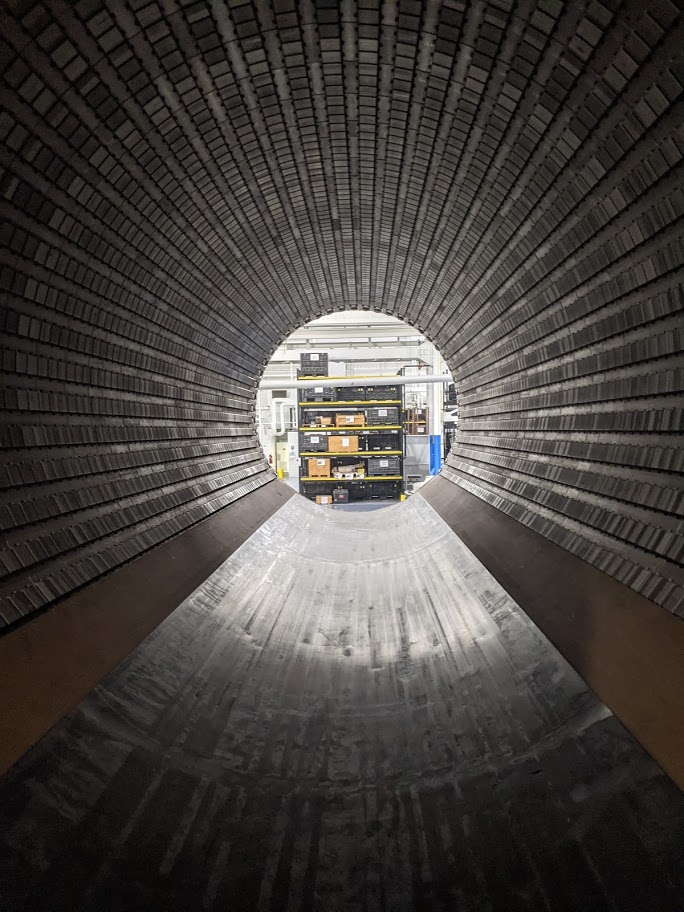
One opportunity I was fortunate to have was to travel to Siemens Energy’s manufacturing plant in Charlotte, NC. Here I got to see generators in every step of them being made. This is a picture I took when they allowed me to climb inside one to test one of my tools.
While being a main designer of this tool, I also assisted the NDE group with other projects. There were a couple of tools I made for testing, and some robotics I messed around with for different tools, all the while learning about the specifics of the company and the power generation industry.
The CAD software used at Siemens Energy is much different than the ones we use in school. Siemens Energy uses a CAD package made by Kubotech3D called KeyCreator Pro. KeyCreator is a direct modeling software compared to SolidWorks which is parametric. The major difference is that KeyCreator does not have a feature tree which makes iterative design occasionally more difficult than if another program was used. Fortunately, most of the work I did at Siemens Energy does not require quick iterative design. I was given projects that I oversaw from start to finish in addition to small one-off items. To test prototypes, Siemens Energy has a whole room full of FDM 3D printers. They also provide us with 3D printers in our cubes since we use them the most. As co-ops, we are tasked with maintaining the printers in the office and helping other engineers use them who are not as familiar with the machines.
Second Rotation (Aug. 2021 – Dec. 2021)
My second rotation was focused around creating a procedure for using The PSA Tool in the field. We had determined early in this rotation that the area where the adhesive was applied needed to be cleaned first, and the best way to do that was a mix of air and denatured alcohol. I created a control box and a tool to clean the area. With this cleaning tool, I also made it able to inspect the area with an endoscope since that was one of the necessary components of our service. This secondary tool does also unfortunately fall into the patent so I cannot show any pictures, and I say unfortunately because it is something I am very proud of. The control box and tool both took a lot of work to get functioning in all the ways we needed them to and is something I am happy I was able to work on for the project.
This second rotation was filled with experiences I will remember for a long time. The first event that happened was presenting to a local school district about my time in college so far, what I do at the company, and answering questions they had about engineering. The second event was giving a presentation to the CEO of Siemens Energy, Christian Bruch, as well as about 15 other executives in the company. These executives were incredibly high up on the chain of command, all individuals who controlled large portions of the company, and talking to just them would have been significant, but also having the CEO just took it a step further. I got to talk about what I had been working on (The PSA Tool as well as some other projects) and my experience in the company as a co-op. Being trusted by my managers to talk to these individuals as well as having those same individuals be attentive, like the project, and seem to take my feedback positively are all things that I will not soon forget.

This is an image of me discussing my project with Christian Bruch, the CEO of Siemens Energy (right), and Rich Voorberg, president of Siemens Energy North America (second from right), with my supervising manager Bob Larson (center) and the engineer I worked with on this specific project, Tony Barca (left).
The third significant event was being able to implement The PSA Tool in the field for the first time. I got to travel to Sherman, Texas for a week, and lead the night shift as we used the tool in an actual generator for the very first time. Being trusted to do this by my managers and the engineer I was designing with is incredibly humbling and something I appreciate immensely. Toward the end of this rotation, I assisted in the application of patent paperwork to the Siemens Energy legal team for The PSA Tool. The patent application is currently submitted and pending review, which feels fantastic. If it goes through, I can then say I am one of two designers on a patent, which is not something I was expecting when looking for a co-op.
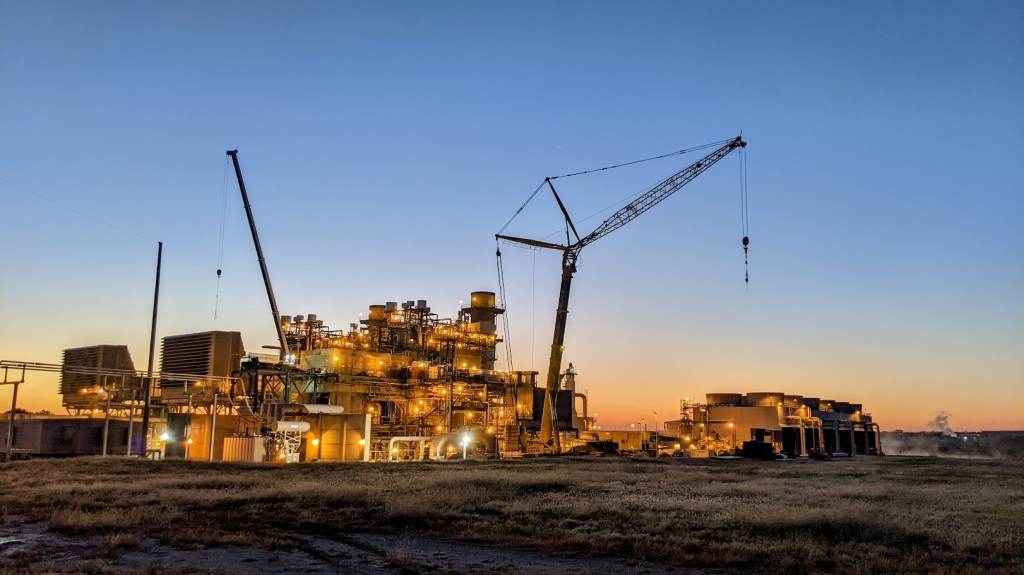
This is an image of a sunrise from one of the last days we were at this power plant. It was very strange going to work during sunset and leaving work when there was a sunrise, but the fantastic sunrises I got to see made it all worth it.
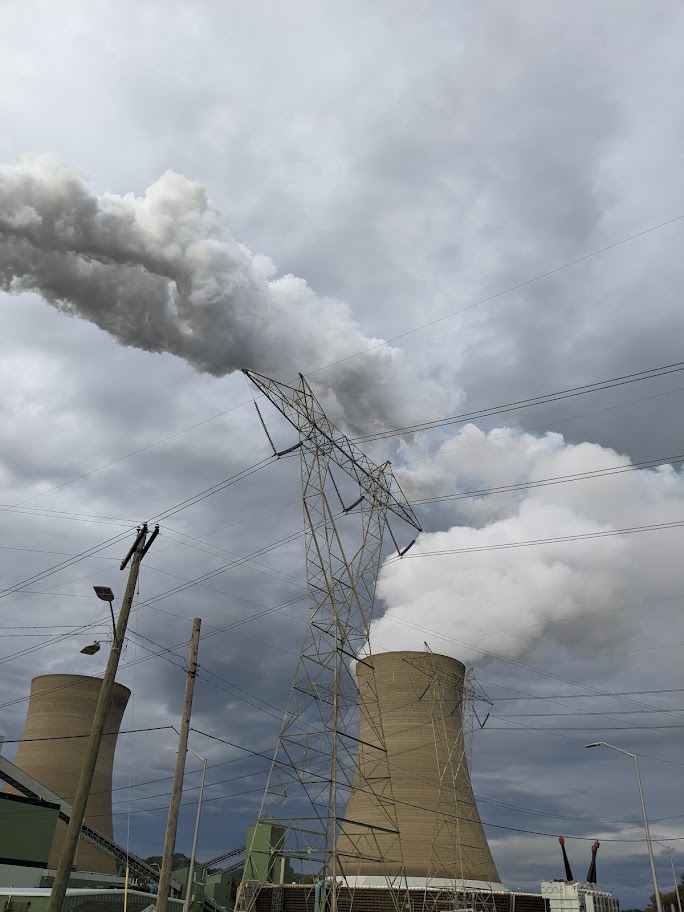
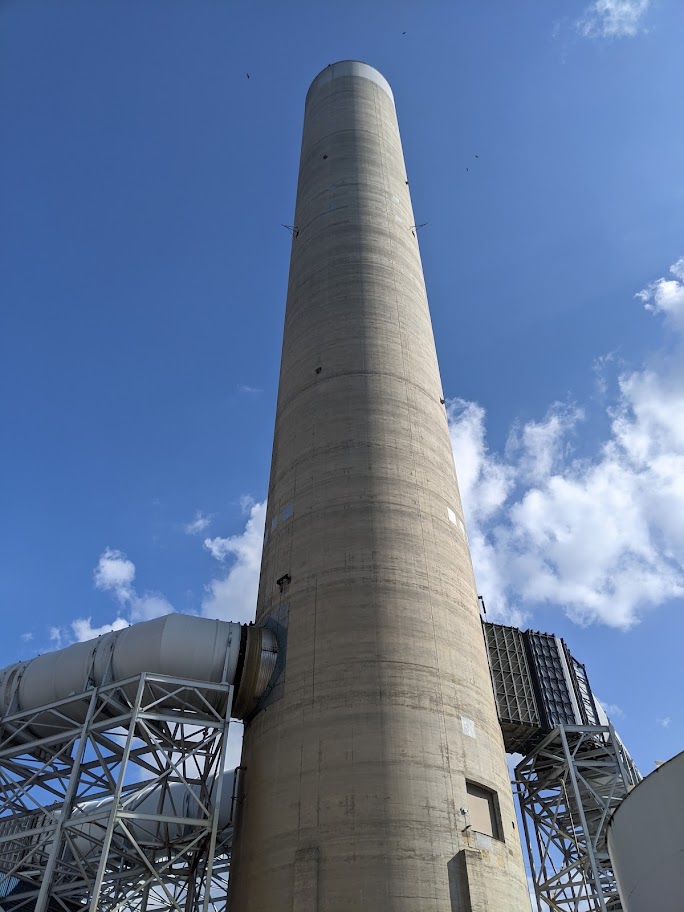
Other exciting events this rotation was going to power plants with NDE technicians and engineers to assist with inspections. I got to learn about the types of inspections done in generators, be inside different types, and learn more about the intricacies of generators I had only scratched the surface of during my first rotation with the informational videos. I had the pleasure of traveling to Haywood, West Virginia, and to Stratton, Ohio. Learning about the generators I was designing parts for assisted with my designs after those visits. Being able to see how much it takes to generate power for the electrical grid, both the scale of everything and how complicated but necessary every part is still amazes me and is something I will remember for a long time.

Third Rotation (April 2022 – Aug. 2022)
My third rotation was relatively uneventful compared to the second, with fewer projects needing work urgently and less time spent at plants. However, this rotation was still as fulfilling as the other two.
The PSA Tool was at a stage during this rotation where the procedure had been figured out, the main tool was almost completely done, and there only needed to be quality-of-life updates to the cleaning system I had initially designed. It was currently in a metal container that was ungainly to handle when operating and there was no way to regulate the air pressure, both being the main goals in the redesign. I added in a compact air regulator and put it in a Pelican Case, which resulted in a lighter control system that was easier to operate. I saw this as a culmination of my 3 rotations as it was a design I initially came up with in a previous rotation, then was trusted to make it look more professional and be an overall better design despite more requirements. This new design works well and will be used in the field.
The other part of The PSA Tool that I worked on this rotation was assembling kits. These kits include everything needed to do this specific job. This meant that a lot of packing and assembly had to take place. The issue that initially started the production of this tool is also occurring in plants that are serviced by our colleagues over in Mulheim, Germany. So, I have been honored to be able to discuss designs with their team over the three rotations, and now send them what we created so they may use it.
This rotation was not as focused on The PSA Tool in the beginning since there was a lot less to focus on designing/improving, which allowed me to branch out into turbines. Almost all my projects during my time at Siemens Energy had been focused on generator inspections/services, just because the timing of things for generators needed to be improved/fixed lining up with my rotations, and turbines not as much. However, a project came up in my last rotation that allowed me to learn about turbine blade inspections, what causes erosion in turbine blades, and how the inspections are carried out. I was tasked with creating a camera mount that a technician could fix to the edge of the blade and take pictures every couple of inches at a specific angle and distance from the blade’s edge. This project was challenging because the camera mount needed to be extremely flexible but still rigid enough to hold the camera, all because of the complex geometry of the blade edges. I enjoyed trying to come up with a design for such a unique problem. Unfortunately, as is the nature of most of my projects, I cannot show any pictures due to the proprietary nature of the blade.
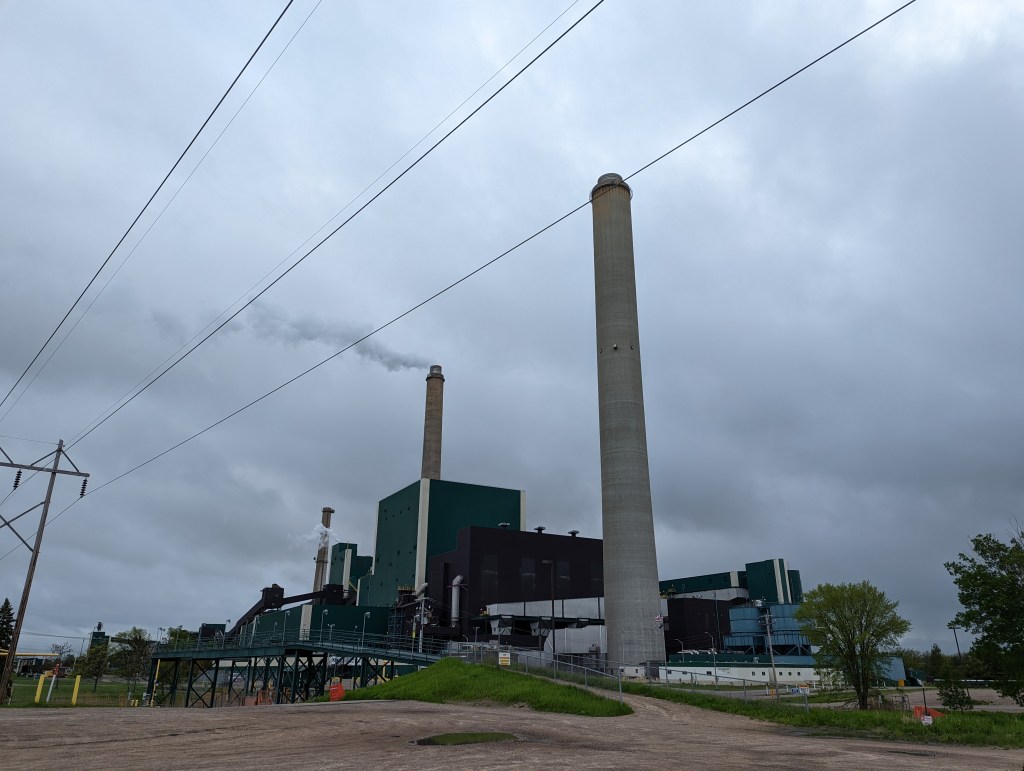
I was able to go to another power plant this rotation, this time in Cohasset, Minnesota. The inspection we did at this site (and the generator in general) was much different than the rest I had seen, so it was a very good learning experience for me.
 Lucas Ramsey